
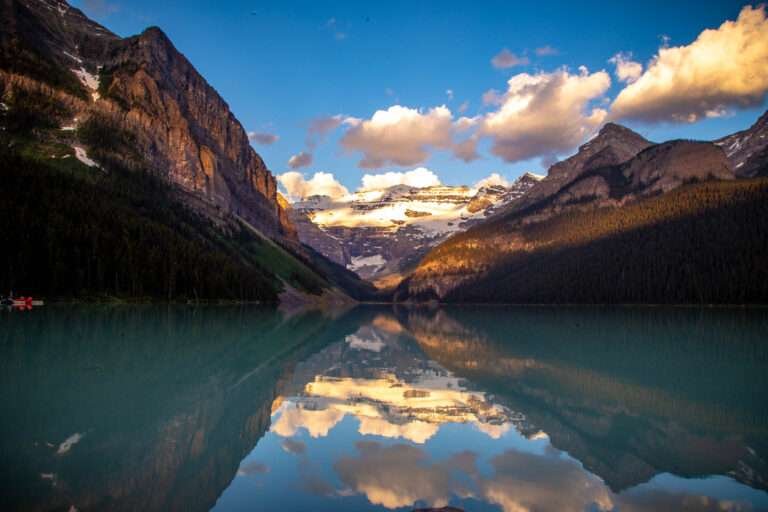
Lake Louise is one of Canada’s most iconic natural destinations, nestled in the heart of Banff National Park in Alberta. With its turquoise waters, dramatic mountain backdrop, and year-round outdoor activities, it attracts visitors from around the world.
Whether you’re planning a summer hike, a peaceful winter visit, or visiting Banff National Park for the first time, Lake Louise requires some planning. This guide covers everything you need to know before visiting Lake Louise so you can avoid common mistakes and enjoy the experience fully.
Lake Louise is located about 45 minutes northwest of the town of Banff and roughly two hours from Calgary International Airport. It sits at the base of Victoria Glacier inside Banff National Park, a UNESCO World Heritage Site.
What makes Lake Louise famous is its unreal blue-green color, created by glacial rock flour suspended in the water. When sunlight hits these fine particles, the lake reflects a bright turquoise shade that looks almost unreal. Surrounded by peaks such as Mount Victoria and Mount Lefroy, the scenery feels straight out of a postcard.
Beyond its beauty, Lake Louise is also known for being accessible year-round, making it one of the few alpine destinations in Canada that offers both summer and winter experiences without requiring advanced hiking skills.
Lake Louise is located approximately 60 km northwest of Banff town. By car, it takes around 35 minutes from Banff, 50 minutes from Canmore, and about 2 hours from Calgary.
If you’re traveling from outside Alberta, you’ll need to fly into Calgary International Airport first. Staying in Calgary is often cheaper for budget travelers, as it’s only a two-hour drive to Banff National Park.
However, from personal experience, staying in Canmore is worth the extra cost. Canmore offers stunning mountain views, a quieter atmosphere, and shorter travel times to Lake Louise. It’s my personal favorite base for exploring the area.
To enter Banff National Park and visit Lake Louise, you must purchase a Parks Canada pass. This pass also allows access to Jasper National Park.
There are two main options:
Adult: $11
Senior: $9.50
Youth: Free
Family/Group: $22
Adult: $75.25
Senior: $64.50
Family/Group: $151.25
If you plan to stay more than 7 days, the annual pass is more cost-effective. You can purchase it online in advance to save time, especially during busy summer months.
Parking at Lake Louise costs $21 per day per vehicle during peak season. Paid parking applies from mid-May to mid-October, between 7 AM and 7 PM. You’ll need to enter your license plate number at the pay kiosk upon arrival.
There is no overnight parking at Lake Louise. During winter, paid parking is not enforced, but spaces remain limited.
Because parking fills up quickly, Parks Canada strongly encourages visitors to use shuttle services. Parks Canada shuttles and Roam Public Transit are reliable, stress-free options, especially during summer and winter weekends.
You can book shuttles through the official Parks Canada website:
https://reservation.pc.gc.ca/
 Best Time to Visit Lake Louise
Lake Louise is beautiful in every season, but the experience changes significantly depending on when you visit.
Winter temperatures in Alberta can range from -10°C to -30°C, with nights occasionally dropping below -40°C. December and January are the coldest months. While the frozen lake and snowy scenery are stunning, road closures due to heavy snowfall can happen. Always check the weather forecast before visiting.
Winter is ideal for ice skating, snowshoeing, photography, and skiing, but January is often best avoided due to extreme cold.
Spring is considered the off-season. The lake begins transitioning back to its blue color, crowds are smaller, and some summer activities start reopening. This is a great time to visit if you prefer quieter conditions.
June and July are the best months to see Lake Louise’s famous turquoise water. Hiking, canoeing, and sightseeing are at their peak. However, July and August are the busiest months, and accommodation prices rise significantly.
Sunrise and sunset are the busiest times of day. If you want to catch these moments, arrive 1–2 hours early. Even in summer, temperatures during sunrise can drop to 0–5°C, so bring a light jacket.
Early September is one of the best times to visit Lake Louise. The weather is pleasant, crowds are smaller, and summer activities are still available. October may bring early snowfall, creating a magical atmosphere with snow falling onto the turquoise water.
Summer offers the widest range of activities:
Walk along the flat lakeshore trail
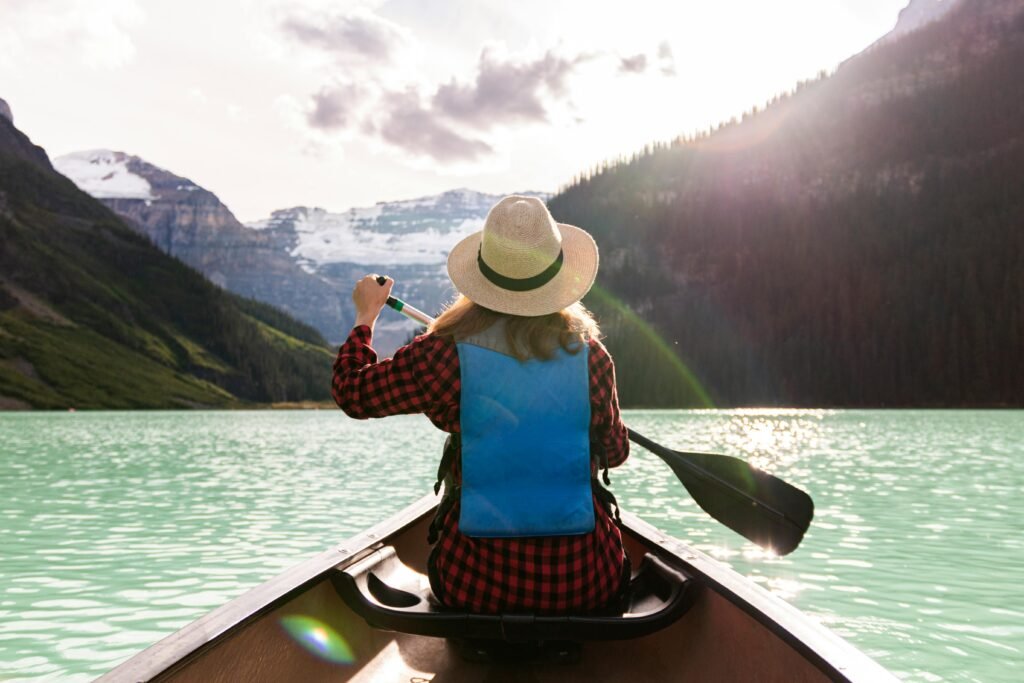
Canoe on the lake
Hike trails like Lake Agnes and Plain of Six Glaciers
Photography and wildlife spotting
Arriving early is essential for a more peaceful experience.
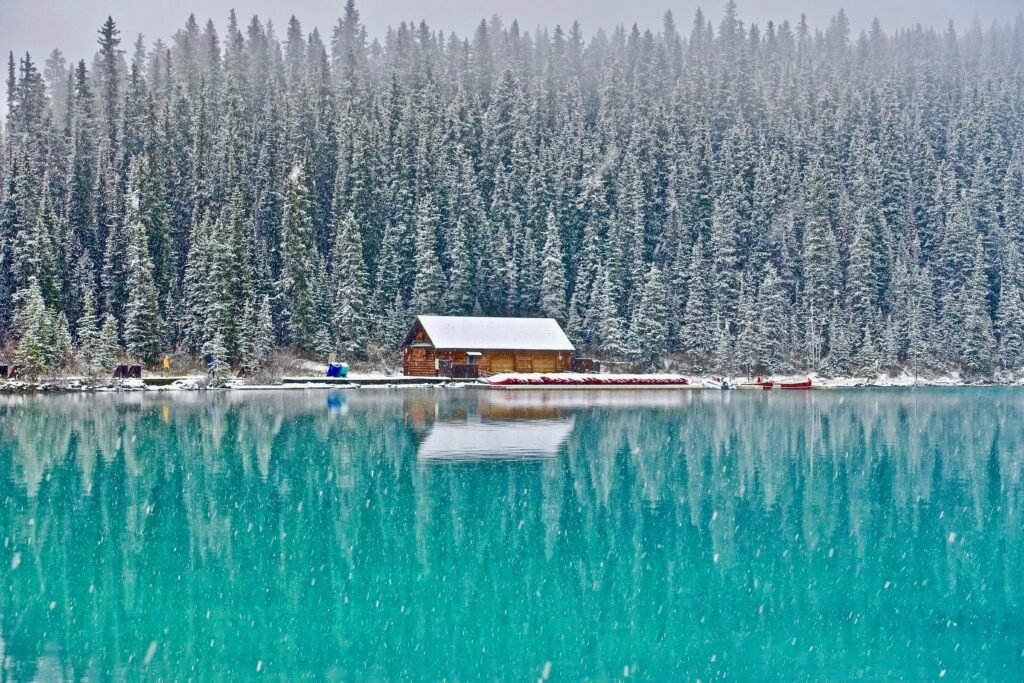
Winter transforms Lake Louise into a serene alpine landscape:
Ice skating on the frozen lake
Snowshoeing on marked trails
Winter hiking with proper footwear
Skiing at Lake Louise Ski Resort
Early mornings offer the quietest and most magical views.
Weather can change quickly in the mountains.
Summer: Comfortable shoes, layers, sunscreen, light jacket
Winter: Insulated boots, warm jacket, gloves, hat, thermal layers
Layering is the best strategy year-round.
You can stay in Lake Louise Village, Banff town, or Canmore. Staying closer to the lake allows early access, while Banff and Canmore offer more accommodation and dining options.
Hotels near Lake Louise are expensive during peak seasons, so booking early is highly recommended.
Arriving late and missing parking or shuttle access
Underestimating weather conditions
Spending too little time at the lake
Ignoring nearby trails and viewpoints
Good planning makes a huge difference.
Fairview Lookout
Distance: 1 km
Time: 1 hour
Difficulty: Easy
Lake Agnes Teahouse
Distance: 3.4 km one way
Time: 3 hours round trip
Difficulty: Moderate
Plain of Six Glaciers
Distance: 5.3 km one way
Time: 4 hours round trip
Difficulty: Moderate
Tramline Trail
Distance: 4.5 km one way
Time: 2.5 hours round trip
Difficulty: Moderate
Lake Annette
Distance: 5.7 km one way
Time: 4 hours round trip
Difficulty: Moderate
Eiffel Lake
Distance: 5.6 km one way
Time: 4.5 hours round trip
Difficulty: Moderate
Little Beehive
Distance: 4.5 km one way
Time: 3–4 hours
Difficulty: Moderate
Big Beehive
Distance: 5.1 km one way
Time: 4 hours
Difficulty: Moderate
Mount Saint Piran
Distance: 6.1 km one way
Time: 6 hours
Difficulty: Hard
Mount Fairview & Saddleback Pass
Distance: 5.1 km to summit
Time: 5–6 hours
Difficulty: Hard
Are boat rentals available at Lake Louise?
Yes, canoe rentals are available during summer at the lakeside boathouse.
Can I see wildlife at Lake Louise?
Yes, but observe from a safe distance and never feed animals.
Are guided tours available?
Yes, including hiking, canoeing, and snowshoeing tours.
Can I swim in Lake Louise?
Swimming is not recommended due to extremely cold water.
Are dogs allowed at Lake Louise?
Dogs must be leashed and are restricted on some trails.
Can I fly a drone at Lake Louise?
No. Drones are prohibited in Banff National Park.
Is there cell service or Wi-Fi?
Cell service is limited near the lake, which makes it a great place to unplug.