
Choosing the best time to visit Banff for first-time visitors isn’t about finding a single “perfect” month — it’s about understanding trade-offs. Banff changes dramatically with the seasons. Weather controls what’s accessible, crowds dictate how relaxed your days feel, and timing affects everything from lake colour to accommodation prices.
For travelers planning a first trip to Banff, the biggest mistake is assuming Banff works the same way year-round. It doesn’t. Some months deliver iconic turquoise lakes and open highways. Others reward patience with quieter trails and lower costs — but demand flexibility. Knowing when should first time visitors go to Banff depends on what you value most: certainty, scenery, calm, or cost.
At a high level, most travel experts agree that mid-June through early October offers the most reliable experience for first-time visitors. This is when lakes are thawed, scenic drives are open, and daylight stretches long into the evening. It’s also when Banff is busiest and most expensive. Official visitor guidance from Banff & Lake Louise Tourism also highlights mid-June through early fall as the most reliable window for first-time trips.
If you’re wondering about the best month to visit Banff first time, there’s no universal answer — only a spectrum. Summer guarantees access but tests your crowd tolerance. Shoulder seasons reward early planners and budget-focused travelers with quieter trails, as long as they accept mixed conditions. Winter flips the experience entirely, trading hiking and lakes for snow sports and icy beauty.
The key for first-timers is alignment: match your expectations to the season, not the other way around.
Weather reliability
Banff’s mountain climate is unpredictable, especially outside peak summer. First-time visitors benefit most from months with stable temperatures and minimal snow interference.
Open lakes, roads, and hikes
Many iconic experiences depend on access. The Icefields Parkway, high-elevation trails, and famous lakes are seasonal. The best time to visit Banff for first time visitors is when closures won’t quietly limit your plans.
Crowd tolerance
July and August deliver the classic Banff experience — along with traffic, full parking lots, and booked-out hotels. Quieter months offer a calmer pace but less certainty.
Budget flexibility
Accommodation prices swing sharply by season. Travelers asking when should first time visitors go to Banff often underestimate how much timing affects cost. Shoulder months can dramatically stretch your budget if you’re willing to trade predictability for value.
Weather conditions and seasonal access can change quickly in the Rockies, as outlined by Parks Canada for Banff National Park.
Understanding Banff’s seasons is the fastest way to decide when should first time visitors go to Banff. Each season reshapes the landscape, the logistics, and the overall experience. For a first trip, timing determines whether your days feel effortless or constrained by weather, closures, and crowds.
For most travelers, summer represents the best time to visit Banff for first time visitors who want the scenery they’ve seen in photos. By late June, iconic lakes are thawed, alpine trails are accessible, and scenic drives like the Icefields Parkway are fully open. Seasonal road access, including the Icefields Parkway, is monitored and updated regularly by Parks Canada.
This is also the most predictable period for weather. Daytime temperatures are comfortable for hiking, canoeing, and sightseeing, making July and August a strong contender for the best month to visit Banff first time if certainty matters more than cost.
The downside is intensity. Summer brings peak crowds and peak prices. Parking fills early, popular viewpoints require shuttles, and accommodation rates are at their highest. First-time visitors get maximum access — but must plan carefully.
Shoulder season often delivers the best compromise for travelers asking when should first time visitors go to Banff without battling summer congestion. Visitor numbers drop noticeably, hotels lower their rates, and trails feel calmer.
Late spring and early fall still offer beautiful scenery, especially at lower elevations. September, in particular, is frequently cited as the best month to visit Banff first time for those who want cooler temperatures, fall colours, and fewer families after school resumes.
The trade-off is variability. Some high-elevation hikes, lakes, and roads may remain snow-covered or close temporarily. Conditions can shift quickly, so flexibility is essential — but value-focused first-time visitors are often rewarded.
Winter transforms Banff into a snow-dominated destination. For first-time visitors focused on skiing, snowboarding, or winter scenery, this season can still represent the best time to visit Banff for first time visitors — but only with the right expectations.
The experience is narrower. Sightseeing access is limited, daylight hours are short, and temperatures regularly drop well below freezing. Instead of hiking and lake visits, the focus shifts to ski resorts, frozen lakes, and snowy canyon walks.
For travelers unprepared for cold weather or winter driving, this season can feel restrictive. For snow lovers, however, winter answers the question of when should first time visitors go to Banff with a very clear niche appeal.
For travelers trying to pinpoint the best month to visit Banff first time, this snapshot shows how quickly conditions change throughout the year. Detailed month-by-month conditions are also reflected in guides published by The Banff Blog. Banff has a short, intense summer and long shoulder periods, so timing matters more here than in most destinations. If you’re asking when should first time visitors go to Banff, the answer often lives in the details below.
June marks the shift toward what many consider the best time to visit Banff for first time visitors. Lower-elevation lakes begin thawing, scenic drives reopen, and hiking options expand week by week.
Conditions are still in flux early in the month, but by late June, access improves significantly. Crowds start to build, yet prices are usually lower than peak summer — making June attractive for first-time visitors seeking balance.
July and August deliver the most complete Banff experience. Warm daytime temperatures, long daylight hours, and fully open lakes, trails, and roads make this period the safest choice for those deciding when should first time visitors go to Banff. Average temperature ranges align with historical climate data published by Environment and Climate Change Canada.
This is also when Banff is at its busiest. Expect full parking lots, shuttle-only access to popular lakes, and premium accommodation rates. Still, for travelers who want certainty, these months are often seen as the best month to visit Banff first time despite the crowds.
September is frequently highlighted as a quiet favorite for first-timers. Cooler temperatures make hiking comfortable, crowds thin after summer holidays, and larch season transforms the landscape.
For many, September strikes the ideal balance between scenery and calm, positioning it as a strong contender for the best time to visit Banff for first time visitors who prefer a slower pace without sacrificing access.
October offers dramatic fall colours early in the month, but access becomes unpredictable. Snow can arrive suddenly, closing high-elevation trails and roads.
For budget-conscious travelers asking when should first time visitors go to Banff with minimal crowds, October can work — but expectations must remain flexible. It’s quieter, cheaper, and less reliable.
From November through March, Banff becomes a winter destination. Skiing, snowboarding, and frozen-lake scenery dominate the experience, while traditional sightseeing takes a back seat.
This period can still be the best time to visit Banff for first time visitors focused on snow sports, but cold temperatures and winter driving require preparation. For others, access limitations may feel restrictive.
Spring is Banff’s most misunderstood season. Hotels are cheaper, crowds are thin, and the landscape begins waking up — but melting snow creates muddy trails and inconsistent access.
For travelers prioritizing value and asking when should first time visitors go to Banff on a tight budget, April and May may be acceptable trade-offs. For those seeking postcard-perfect conditions, patience is better rewarded later.
The best time to visit Banff for first time visitors depends less on the calendar and more on how you plan to experience the park. Below is a clear breakdown to help match travel style with timing — especially useful if you’re still deciding when should first time visitors go to Banff.
Mid-June to September is the safest window for first-time visitors focused on Banff’s most famous sights. This period offers thawed turquoise lakes, open scenic drives, and reliable hiking conditions.
If your priority is seeing Lake Louise, Moraine Lake, and the Icefields Parkway without worrying about closures, this window often defines the best month to visit Banff first time, with July and August offering maximum certainty.
Travelers seeking breathing room should look to May, early June, late September, or October. These periods fall outside peak summer demand and deliver a calmer version of Banff.
While access may be slightly limited, many first-time visitors find this trade-off worthwhile when deciding when should first time visitors go to Banff without peak-season pressure.
Shoulder seasons offer the strongest value. Accommodation rates drop, tours discount, and restaurants run quieter schedules — all without the premium pricing of summer.
For cost-conscious travelers weighing the best time to visit Banff for first time visitors, shoulder months provide a chance to experience Banff without stretching the budget, as long as expectations stay flexible.
December to March is ideal for first-time visitors focused on winter sports and snowy scenery. Ski resorts operate at full capacity, frozen lakes appear, and Banff delivers a classic alpine winter atmosphere.
This period answers when should first time visitors go to Banff clearly for snow lovers — but it’s best suited to travelers prepared for cold weather and winter driving. Winter conditions and ski season timelines are coordinated through SkiBig3, which represents Banff’s three major ski resorts.
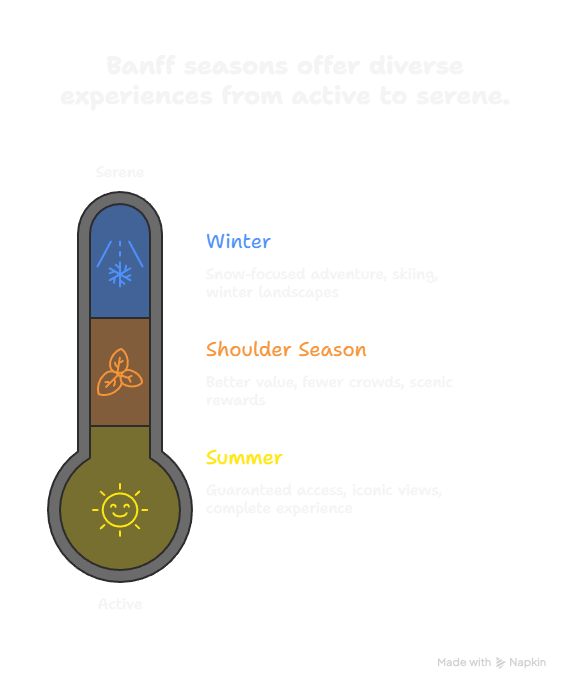
For most travelers, the best time to visit Banff for first time visitors falls between mid-June and September, when lakes are thawed, roads and trails are fully open, and the landscape matches the iconic images that define Banff. This window offers the highest level of certainty — especially for those deciding when should first time visitors go to Banff without worrying about closures or unpredictable conditions.
That said, there is no single “perfect” month for everyone. July and August deliver the most complete experience but demand patience with crowds and higher prices. September quietly stands out as a favorite for many, combining cooler weather, fewer visitors, and peak scenery — often earning its reputation as the best month to visit Banff first time for balanced travelers.
Ultimately, the right answer comes down to expectations. If you value guaranteed access, choose summer. If you prefer value and calm, shoulder seasons reward flexibility. And if snow is your priority, winter delivers a different but equally memorable first impression. Align your timing with your travel style, and Banff will meet you at its best.