Planning a trip to the Canadian Rockies can feel intimidating—especially when you realize just how vast Banff National Park really is. For many first-time visitors, the biggest question comes early: Do I need a car to experience Banff properly?The short answer is reassuring. Visiting Banff without a car is not only possible, it’s increasingly common—and often easier than driving. Thanks to a well-developed transit system, walkable town design, and mandatory shuttle access to key sights, Banff has quietly become one of the most no-car-friendly national parks in North America.This guide breaks down exactly how banff without car travel works, what first-time visitors should expect, and how to move around confidently using public transit—without missing the highlights that make Banff iconic.
Is Visiting Banff Without a Car Really Possible for First-Time Visitors?
Yes—visiting Banff without a car is absolutely doable for first-time visitors, and in many cases, it’s the smarter choice. Banff’s townsite is compact, highly walkable, and designed around transit rather than private vehicles. Most hotels, restaurants, shops, and trail access points are clustered along Banff Avenue or within a short walk of it.More importantly, many of Banff’s most famous attractions no longer allow unrestricted private vehicle access. Places like Lake Louise and Moraine Lake now rely heavily on shuttles and buses, meaning travelers without a car are no longer at a disadvantage. In fact, banff no car travel often avoids the stress of parking restrictions, long traffic backups, and unpredictable road conditions—especially during peak summer and fall seasons.For first-time visitors, this levels the playing field. Whether you arrive by airport shuttle from Calgary or regional bus service, you can reach Banff, settle into town, and explore confidently using public transportation and your own two feet.
Why Banff Is One of the Easiest National Parks to Visit Without a Car
Banff stands out because it was forced to adapt early. With millions of visitors each year and a limited road network, the park simply couldn’t sustain unlimited vehicle access. The result is a transit system that actually works for travelers.Roam Transit connects Banff town to Lake Louise, Canmore, Johnston Canyon, Lake Minnewanka, and major trailheads using frequent, clearly marked routes. Seasonal Parks Canada shuttles fill in the gaps for high-demand areas, while biking and walking paths link scenic viewpoints directly to town. Together, these systems make banff without car travel not just viable, but efficient.Add in real-time transit tracking, mobile ticketing, reservable express routes, and multi-day passes, and you get something rare in a national park: predictability. With the right planning and a few banff transportation tips, first-time visitors can move through Banff without constantly checking parking availability or adjusting plans on the fly.In short, Banff isn’t just tolerating car-free travel—it’s actively built for it.
Getting to Banff Without a Car from Calgary
For most first-time visitors, the journey into the Rockies begins in Calgary. The good news? Getting to Banff without a car from Calgary is simple, reliable, and well-supported year-round. You don’t need to navigate mountain highways, watch weather forecasts obsessively, or worry about parking once you arrive.Instead, visitors traveling to Banff without car typically rely on scheduled shuttles and intercity buses that run directly from the airport or downtown Calgary to Banff town. These services are designed specifically for travelers—meaning luggage space, predictable schedules, and drop-offs close to hotels.For a first trip, this approach removes friction right from day one.
Airport Shuttles: The Easiest Way to Reach Banff Without Car
Airport shuttles are the most straightforward and stress-free option for banff without car travel. From Calgary International Airport, multiple shuttle operators run frequent, year-round service straight to Banff and nearby towns like Canmore.Travel time typically falls between 1 hour 45 minutes and 2 hours, depending on weather and traffic. Many services offer direct hotel drop-off, which is ideal if you’re arriving after a long flight or carrying heavier luggage. Booking online in advance is strongly recommended—especially during summer and fall—since popular departure times do sell out.For first-time visitors, airport shuttles eliminate guesswork. You land, board, and arrive in Banff without touching a steering wheel.
Budget Options: Regional Buses and Long-Distance Coaches
(banff transportation tips)If you’re watching costs closely, there are budget-friendly ways to reach Banff without renting a car. Seasonal regional buses connect downtown Calgary to Banff and Canmore at a lower price point, though with more limited schedules. These services usually run on weekends and holidays during peak travel months, making them better suited for flexible itineraries.Long-distance coach companies also serve the Calgary–Banff corridor, sometimes continuing onward to Lake Louise, Jasper, or even Vancouver. Travel times are similar to shuttles, but stops may be more centralized rather than hotel-specific.One key banff transportation tip: budget options save money, but they require tighter planning. Always check return schedules in advance so you’re not stranded or rushing at the end of your trip.
Getting Around Banff Without a Car Once You Arrive
Once you’re in Banff, moving around without a vehicle is far easier than most first-time visitors expect. Banff’s townsite is compact, flat, and built around pedestrians, cyclists, and buses—not highways.Most sightseeing days start right from your hotel door. Restaurants, cafés, shops, river paths, and scenic viewpoints are clustered closely together. For anything beyond town limits, public transit fills the gap, making banff without car travel surprisingly efficient.
Walking and Biking in Banff Town
Walking is often the fastest way to get around Banff town. Banff Avenue forms the backbone of the community, and many attractions sit within a 10–20 minute walk of each other. Scenic riverside paths along the Bow River double as sightseeing routes, turning simple walks into memorable experiences.Biking is another strong option in warmer months. Dedicated paths connect the town center to viewpoints, parks, and quiet corners just outside the core. For short distances, walking and biking often outperform buses—no schedules, no waiting, just freedom.
Roam Transit Explained for First-Time Visitors
(banff transportation tips)Roam Transit is Banff’s local and regional public transportation network—and it’s the backbone of banff no car travel. Roam buses serve Banff town, Canmore, Lake Louise, and several major attractions using modern, accessible vehicles with real-time tracking.Fares are affordable, tickets can be purchased on your phone, and buses are designed with visitors in mind. Many routes accommodate bikes, skis, and strollers, and service frequency increases during peak seasons.A crucial banff transportation tip: Roam isn’t just for locals. It’s built for travelers who want to explore without driving.
Key Roam Routes Every No-Car Visitor Should Know
For first-time visitors traveling banff without car, a few Roam routes do most of the heavy lifting:
Route 1 – Connects Banff Avenue with the Banff Gondola and Upper Hot Springs area
Route 2 – Links Tunnel Mountain campgrounds with downtown Banff and Banff Springs area
Route 6 – Seasonal route to Lake Minnewanka, Two Jack Lake, and nearby viewpoints
Route 8X – Express service between Banff and Lake Louise
Route 9 – Seasonal access to Johnston Canyon
Knowing these routes in advance transforms Banff from an intimidating national park into a connected, easy-to-navigate destination—no car required.
How to Visit Lake Louise Without a Car
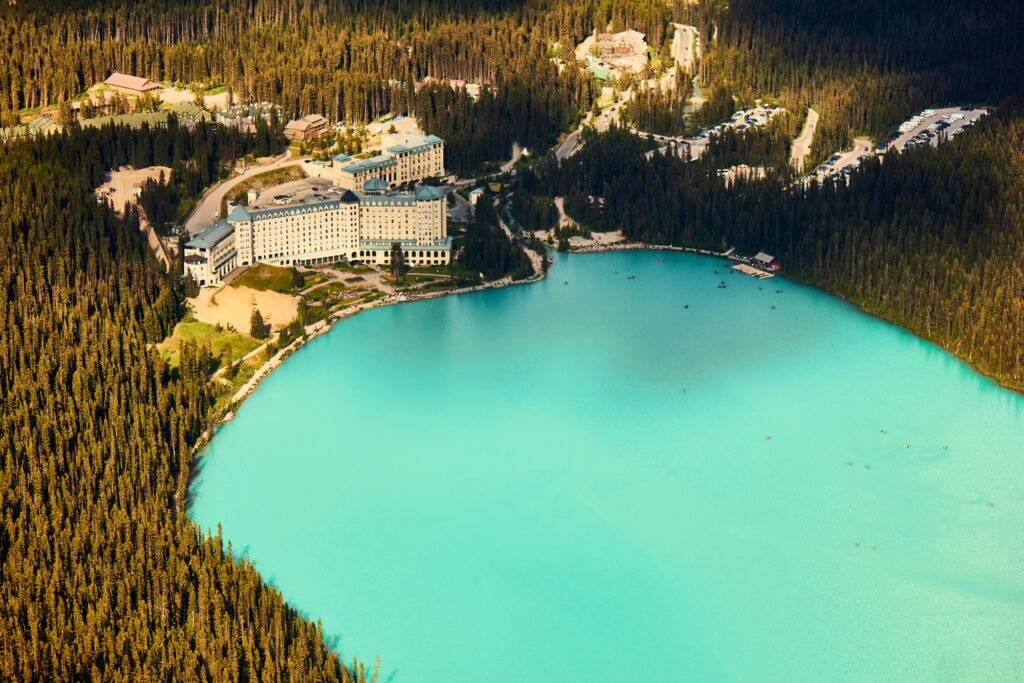
For most first-time visitors, Lake Louise is non-negotiable. It’s also where many people assume a car is essential. In reality, Lake Louise is one of the easiest places to visit in Banff without a car, thanks to dedicated transit routes and mandatory shuttle access.Private vehicle access to the lakeshore is now heavily restricted, especially during peak season. This means travelers relying on buses and shuttles are no longer “missing out”—they’re using the exact system Banff is designed around. With a bit of planning, banff without car travel to Lake Louise is smooth, predictable, and often less stressful than driving.
Using Roam Transit to Reach Lake Louise
The primary way to reach Lake Louise from Banff town is via Roam Transit. The regional Route 8X (Lake Louise Express) runs between Banff and Lake Louise Village along the Trans-Canada Highway.This route is reservable, which is a major advantage during busy seasons. Travel time is roughly 45–60 minutes, and buses are designed for visitors, with space for backpacks and day gear. For first-time visitors traveling banff without car, reserving Route 8X in advance removes uncertainty and helps you plan your day confidently.Once in Lake Louise Village, Parks Canada shuttles take over for access to the lakeshore itself.
Getting from Lake Louise to Moraine Lake Without a Car
(banff no car travel)Driving to Moraine Lake is no longer allowed for private vehicles. Every visitor—car or no car—must use a shuttle, bike, or guided transport. This makes banff no car travel to Moraine Lake completely normal.From Lake Louise Lakeshore, Parks Canada operates a connector shuttle that runs regularly between Lake Louise and Moraine Lake during the operating season. These shuttles are frequent, efficient, and designed specifically to manage crowds at both locations.The key is coordination: arrive at Lake Louise using Roam Transit, then transfer seamlessly onto the Parks Canada shuttle. No parking battles, no early-morning road closures, no stress.
Roam Super Pass: Is It Worth It for First-Time Visitors?
For first-time travelers planning multiple transit days, the Roam Super Pass is often the smartest option. This one-day pass allows unlimited travel on Roam Transit routes across Banff, Canmore, and Lake Louise—and includes access to the Parks Canada Lake Connector shuttle between Lake Louise and Moraine Lake.If your itinerary includes Lake Louise, Moraine Lake, and at least one additional Roam route on the same day, the Super Pass quickly pays for itself. It also simplifies logistics: one purchase, one ticket, no juggling fares.For visitors navigating banff without car travel for the first time, the Super Pass offers simplicity and flexibility—two things that matter more than saving a few dollars.
Top Banff Attractions You Can Visit Without a Car
Lake Louise may get the spotlight, but it’s far from the only highlight accessible without driving. In fact, many of Banff’s most popular attractions are easier to reach by bus than by car, especially during peak season.Using Roam Transit and short walks, first-time visitors can build full sightseeing days without ever opening a car door.
Banff Gondola, Upper Hot Springs, and Sulphur Mountain
The Banff Gondola, Banff Upper Hot Springs, and Sulphur Mountain area are all served by Roam Transit. Local routes connect downtown Banff directly to the gondola base, making this one of the simplest excursions for banff without car travelers.This area works especially well as a half-day plan: gondola ride or hike, a soak in the hot springs, and a relaxed return to town—all without worrying about parking or traffic on the steep access road.
Johnston Canyon Without a Car
Johnston Canyon is another classic stop that fits perfectly into banff no car travel. Seasonal Roam routes connect Banff town directly to the canyon trailhead, eliminating the need to navigate one of the park’s most congested parking areas.The hike itself is well-maintained and suitable for a wide range of fitness levels, with options ranging from a short walk to the lower falls to a longer hike toward the Ink Pots. For first-time visitors, this is one of the easiest ways to combine transit and hiking in Banff.
Lake Minnewanka, Two Jack Lake, and Scenic Viewpoints by Bus
Several of Banff’s most scenic lakes and viewpoints sit along the Lake Minnewanka loop—and seasonal Roam routes make them accessible without driving. Stops include Lake Minnewanka, Two Jack Lake, and nearby picnic areas and trailheads.This route is ideal for relaxed sightseeing days: hop off for photos, short walks, or lakeside breaks, then catch the next bus onward. For travelers exploring banff without car, it’s one of the best examples of how transit opens up the park instead of limiting it.
Where to Stay in Banff Without a Car
Where you stay matters far more when you don’t have a vehicle. The right location can eliminate unnecessary bus rides and turn simple walks into highlights of your trip.
Best Areas for Walking and Transit Access
For banff without car travel, downtown Banff is the clear winner. Hotels near Banff Avenue or close to major Roam Transit stops give you immediate access to buses, restaurants, shops, and walking paths.Staying centrally means early mornings are easier, late dinners don’t require transit planning, and spontaneous walks become part of the experience. Many well-known hotels cluster in this area precisely because it works so well for car-free visitors.
Where Not to Stay if You Don’t Have a Car
(banff no car travel)If you’re relying entirely on public transport, avoid accommodations along remote highways or outside Banff town. Areas near the Bow Valley Parkway, Icefields Parkway, or isolated lodges may look scenic—but they often lack reliable transit, walkability, or dining options.Similarly, staying directly in Lake Louise village without a car can feel restrictive once shuttles stop running in the evening. For first-time visitors focused on banff no car travel, staying in Banff town offers far more flexibility and fewer logistical headaches.
Banff Transportation Tips for First-Time Visitors Without a Car
(banff transportation tips)Traveling banff without car works best when you plan around transit realities instead of fighting them. A little preparation goes a long way—especially during peak season.
When to Book Buses and Shuttles
If your trip falls between late spring and early fall, book early. Express routes to Lake Louise, Moraine Lake connectors, and popular shuttle services often sell out days—or weeks—in advance during summer and larch season.As a rule of thumb:
Book airport shuttles as soon as flights are confirmed
Reserve Lake Louise–related transport before finalizing daily plans
Aim for early departures to beat crowds and secure return options
One of the most useful banff transportation tips is to treat transit reservations the same way you would treat attraction tickets—non-negotiable for high-demand days.
Park Pass Rules (Even If You Don’t Drive)
A common first-time misconception: “I don’t have a car, so I don’t need a park pass.” That’s not true.A valid Parks Canada pass is required for everyone entering Banff National Park—whether you arrive by bus, shuttle, bike, or tour. You can purchase daily or multi-day passes online or at official entry points.Even when traveling banff without car, park pass checks are routine at shuttle boarding areas and attractions.
Transit Apps, Tickets, and Timing Tips
Public transit in Banff is visitor-friendly, but it rewards organization. Roam Transit offers mobile ticketing and real-time tracking, which helps reduce waiting and uncertainty.A few practical tips:
Buy tickets digitally whenever possible
Track buses in real time to avoid unnecessary waiting
Build buffer time into your day—mountain weather and crowds can slow everything
These small habits turn banff no car travel from “manageable” into genuinely smooth.
Limitations of Visiting Banff Without a Car (What to Know in Advance)
(banff without car)While Banff is remarkably accessible without driving, it’s not perfect. Knowing the limitations upfront helps you plan smarter—and avoid frustration.
Early Sunrise, Crowds, and Timetable Constraints
The biggest trade-off with banff without car travel is timing. Public transit doesn’t start early enough for true sunrise photography at places like Moraine Lake, and last return buses cap how late you can stay out.During peak season, crowds also dictate schedules. Missing a bus can mean waiting for the next one—or adjusting plans entirely. Flexibility matters more without a vehicle.
Places That Are Hard to Reach Without a Vehicle
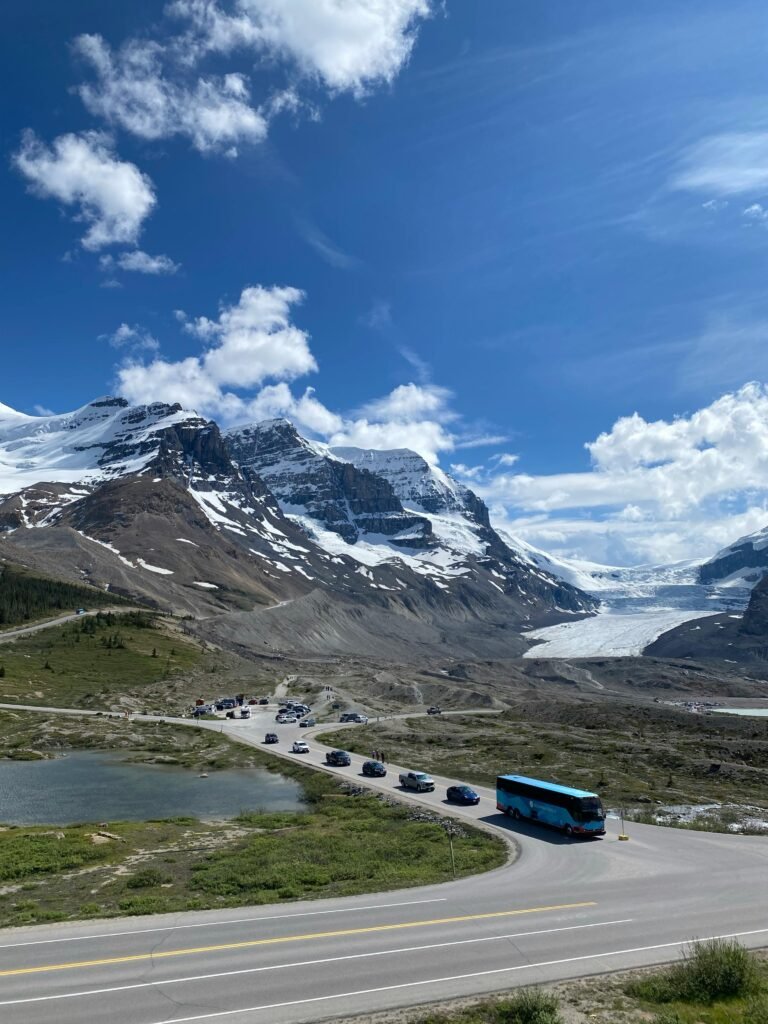
Some areas simply aren’t transit-friendly. Scenic highways, remote trailheads, and lesser-known viewpoints often require a car or guided tour. The Icefields Parkway, in particular, is best experienced via organized excursions if you’re traveling car-free.This doesn’t ruin a trip—but it does mean accepting that banff no car travel focuses on the highlights, not every hidden corner.
Is Banff Without a Car Worth It for First-Time Visitors?
A car-free Banff trip works especially well if you:
Are visiting Banff for the first time
Prefer structure over spontaneous driving
Want to avoid parking stress and traffic
Plan to focus on iconic sights and classic hikes
In these cases, banff without car travel often feels simpler, calmer, and more enjoyable than driving.
When Renting a Car Might Still Make Sense
Renting a car can be worth considering if:
You want full control over sunrise and late-night timing
You plan to explore remote areas extensively
You’re visiting in shoulder season when transit is reduced
Even then, many visitors choose a hybrid approach—car-free days in Banff town paired with a short rental or guided tour for harder-to-reach locations.✨ Final takeaway: Banff without a car isn’t a compromise—it’s a strategy. For first-time visitors, it removes stress, simplifies planning, and aligns perfectly with how the park now operates.